
Lessons in Mayoral Legacy Building

Today is the first day of Mayor Mike Johnston’s term in office. He is Denver’s first new mayor in 12 years.

Like those before him, Mayor Johnston is greeted with no shortage of urban challenges and a future ripe with opportunity, begging the question: what will he achieve?

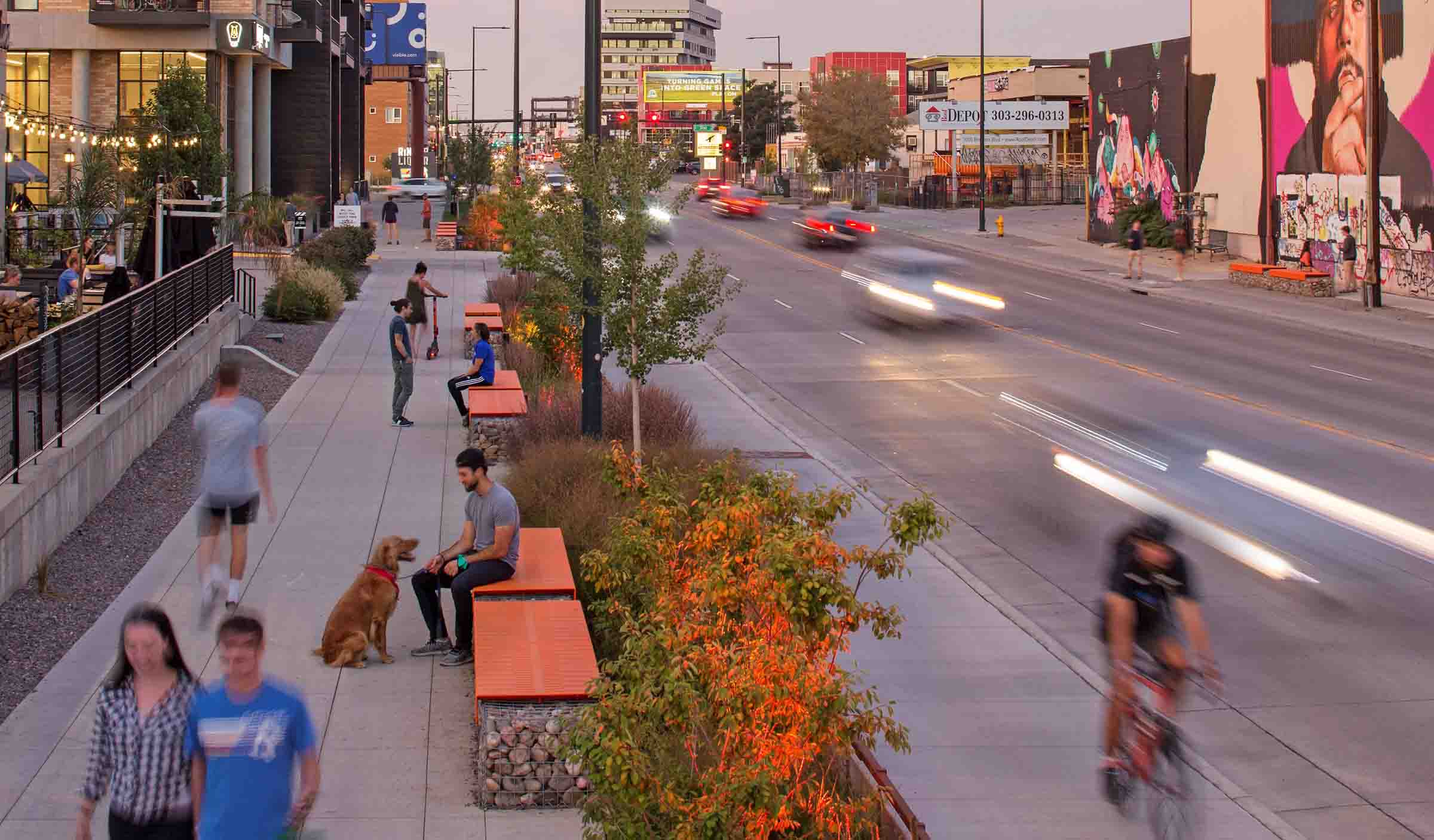
Former Mayor Michael Hancock identified the transformation of Brighton Boulevard as the legacy-defining project of his 12 years as mayor.

As he said in in an interview last week:

“I look at the redo of Brighton Boulevard, the rebuilding of Brighton and the attraction of new private development around Brighton and just that whole new area changing. I called it the Corridor of Opportunity…I’m proud of (all) those groundbreaking moments…But I think when you look at Brighton Boulevard and what happened in Union Station under our watch, those are the things that I’m most proud of.”

Brighton evolved from an industrial backdoor to downtown, into a thriving new gateway to the Mile High City. Mayor Hancock put it on par with what Denver International Airport, under Mayor Peña, and Coors Field, Ball Arena (formerly the Pepsi Center) and Empower Field at Mile High (formerly Invesco Field at Mile High), under Mayor Webb, did for Denver.

As part of the core team that helped take Brighton Boulevard from concept to reality, GBSM President and CEO Andy Mountain reflects on Brighton’s transformation and shares  seven strategic cornerstones that were key to this legacy-establishing project’s success.

Start with a shared vision.

Beginning from a place of possibility enables bigger and bolder thinking – anything less limits a project’s potential. As an example,  our introductory meeting to this project began with an engineer from the City and another from one of the most prominent and influential developers in the area bickering over whether the vehicle lanes on Brighton should be 12 feet wide or 10 feet wide. While space was tight, it made no sense to start with the minutia when we hadn’t even begun fully exploring the opportunity to create something transformative and truly special.

Co-create with the community.

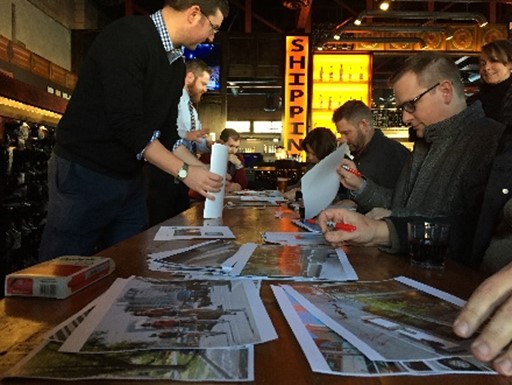
You don’t need a technical degree to be creative and innovative. Often, community members – like frontline employees in a corporate setting – have a clearer sense of the challenges and solutions to a problem than expert planners or corporate executives. We collaborated with the community to bring a diverse coalition of interested individuals together to listen to one another and help us plan and design the future. We engaged longtime business owners, new developers, artists, bike and pedestrian safety advocates, old-guard community members and more. We welcomed them to the same table as our traffic engineers, landscape architects, drainage engineers and other experts on the project team. This established a sense of mutual trust, and it inspired greater motivation among our technical experts to meet the dreams and desires of the local community.

Take calculated risks and admit when you’re wrong.

Brighton Boulevard wasn’t intended to be a legacy-establishing project. While it was one of several projects in the mayor’s “Corridor of Opportunity” , it certainly wasn’t the highest profile of them. And with a limited development area of a one-mile long, 60-80 foot wide stretch of roadway, it was far from the largest project. Throughout the process, we were always clear that we didn’t have all the answers.

For example, one public meeting promised to be quite heated, as the community wanted bike lanes on Brighton and the city engineers wanted them a block off Brighton. Arguably, we could make either work. And both options had their advantages and disadvantages. On the afternoon of the meeting, I sat down with the city’s head of transportation and the executive director of the mayor’s office responsible for the Corridor of Opportunity, and they collectively decided that the community was right: we needed to find the best way to integrate safe bike lanes along Brighton Boulevard.

We opened the meeting by telling attendees that they were right and acknowledged that, while we didn’t quite know how we would be able to adjust the design to incorporate bike lanes, we would challenge the designers to find a creative solution. Seeing a city leader admit they were wrong and double down on a commitment to give the community what they knew was best showed real leadership and was pivotal to establishing trust and true collaboration that benefited the project throughout its development.

Break through bureaucratic norms.

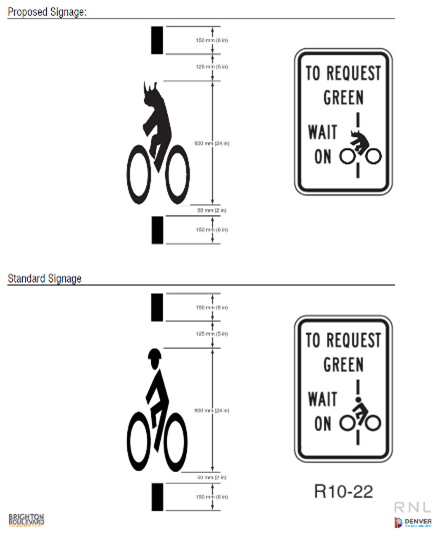
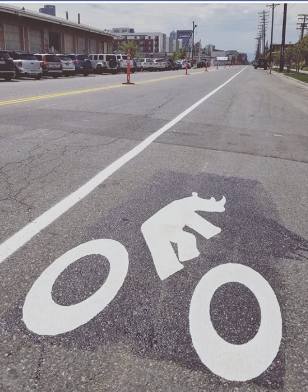
One of the project’s more visible, but simple, moments of creativity started with a landscape architect doodling to entertain himself during a internal coordination meeting on September 3, 2015. He sketched a rhinoceros riding a bicycle. It was a playful homage to the River North (RiNo) Art District that resides in Denver’s Five Points, Globeville and Elyria-Swansea neighborhoods, where the project is located.

I remember snatching his notebook, holding it up to interrupt the meeting and telling the team, “we have to find a way to make this happen, instead of putting typical bike symbols on the bike lanes!”

While some creative street markings were beginning to happen at the time (e.g., piano keys for crosswalks), everyone loved the idea but cautioned my enthusiasm. They knew that we’d have to go through a city process to request variance from the normal street markings. While there were a multitude of bureaucratic concerns (precedent setting, maintenance costs, industry signage standards, and more), it was refreshing to see vision win out and the city’s transportation team approve the RiNoCycle markings that you can now find throughout Art District.

Integrate art early in the process.

One of the biggest mistakes I see cities and private developers make is waiting until after they’ve completed their core project design to begin thinking about public art. This often results in missed opportunities for a cohesive artistic experience, providing well-intentioned, but uninspiring, “bolt-on” additions that feel artificial.

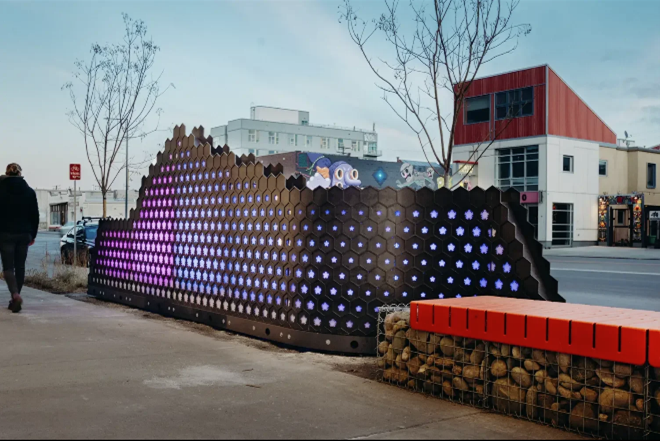
Thanks to Denver’s wonderful Public Art Program, 1% of the project budget was dedicated to public art. Because artists were intentionally included in the visioning process, space for art was reserved throughout the corridor. We finalized art plans early enough to incorporate necessary power that bring to life the interactive LED light sculptures throughout the corridor.

An added benefit of early integration of art was the inclusion of other artistic elements into typical infrastructure design. Functional lighting was creatively inspired. Seating walls and wayfinding signage were collaboratively developed with the RiNo Art District. And while I regret that we weren’t able to integrate RiNo co-founder Tracy Weil’s dream of using luminescent pavement on the bike lanes, embracing artistic and creative ideas like that from the outset of the project helped inspire and elevate the design team’s performance.

Time-limited implementation funding can speed consensus building.

Whether it’s community development or organizational innovation, when there is no implementation funding immediately available, human nature often takes over and people go overboard debating what could or should be done, instead of focusing on getting things done.

As president Obama recently advised in an interview with LinkedIn’s editor-in-chief, “just learn how to get stuff done.”

The way I think about it, talk is talk. But action is impact.  

We had three favorable funding elements on Brighton Boulevard. First, we had the private-funding benefit of a number of developers actively in their design and/or permitting phases. They were motivated to help the city figure out its design so that theirs would effectively integrate. Second, Mayor Hancock identified some expiring one-time funding that he dedicated to implementing the project. Finally, we were helping the RiNo Art District form two special districts: a broad Business Improvement District to fund district-wide placemaking efforts and a General Improvement District to fund Brighton-specific infrastructure elements. We were able to use the motivating power of these financial forces to focus timely consensus building and decision making to keep the design process on schedule so that we could transition directly into construction.

Accept that change won’t always be pretty or perfect.

Change is never easy. And you don’t always win. For example, many in the community assumed that Denver’s Urban Renewal Authority would declare the area “blighted.” This would have created the opportunity for Tax-Increment Financing to help take the project to the next level by integrating and accelerating, additional public investments in the community, such as parks, riverfront enhancements, improved pedestrian connections and more.

While this didn’t happen, the overarching vision we were able to establish for the area provided the public and private sectors with the perfect roadmap and well-supported vision for the ultimate developments that have emerged in the years since the Brighton Boulevard project was completed.

Mayor Johnston is inheriting a number of challenges and opportunities as he starts his term.  Many of the lessons Mayor Hancock’s teams learned through the design and development of Brighton Boulevard can provide valuable guidance and motivation to help Mayor Johnston and his administration as they work in partnership with the community to shape the future of Denver and build their own legacy.


Photo credits: Stantec, Andy Mountain, The RiNo Art District and the City and County of Denver.

Headshot of Andy Mountain

This is America

Our CEO, Andy Mountain, drafted this short essay as part of his quest to find reasonable, but impactful, solutions to address the increase in gun violence in America. He wrote it in response to the antagonistic and polarizing responses we continue to see on this wicked problem. Solving societal problems like this won’t happen overnight. And they will never happen if we continue to retreat to extremist positions and demonize other Americans with views that are different than our own. We share this in hopes that you find some commonality, hope and motivation to act.

This is America. 

On May 25, 2022, an 18 year old barreled into an elementary school and murdered 19 children and two teachers. 

One day later, a neighbor in my suburban Denver neighborhood was walking home from the ATM when a car stopped short of our alley, waited for him to start crossing the alley, then zoomed in to cut him off, pointed a gun at him and told him to give them his cash. 

Two days later, two high schoolers thought it was a good idea to bring what turned out to be paintball guns to school and text threatening photos to classmates. Law enforcement from three agencies swarmed the school. Kids took cover under desks. Schools nearby – preschools, elementary schools, middle schools and high schools – locked their doors to ensure their students’ stayed safe. 

Eight days later, a disgruntled patient marched into a clinic and murdered his doctor and two others. 

This is America. 

There have now been 233 mass shootings in the US this year. And we’re only 151 days into the year. 

Despite all this, talk about background checks, red-flag laws or limiting access to military style weapons and accessories isn’t tolerated. It’s considered politicizing a tragedy or a slap in the face of our founding fathers. 

Reasonable steps to ensure that the wrong guns don’t end up in the wrong hands are not unreasonable. I mean, the Texas murderer would’ve been turned down at most liquor stores if he tried to buy a six-pack of Shiner. But he was able to buy two assault rifles and 100s of rounds of ammunition in 72 hours without anyone batting an eye. 

This is America. 

Stronger regulation of firearms is not a “silver bullet.” Alone, it won’t solve this crisis. 

80% of mass murderers were noticeably in crisis before taking their deadly actions. More than 2/3 of them exhibited these signs months or years in advance. That leaves plenty of time for family members or mental health professionals to intervene.

But take Colorado as an example. When family members report a red-flag law instance, less than 1/3 of the time is it granted…compared to 95% of the time law enforcement requests it. How many times has a friend, co-worker or family member asked if you are doing okay in the last 12 months? Now compare that to how many times a police officer asked the same. 

This is America. 

But hope is not lost. The control actually rests in my hands. Your hands. We, collectively, have the power. 

It starts with community. Check in on friends, family and co-workers. Ask them how they are doing. Let them know you care about them and that they matter. 

Open doors for people. 

Let drivers – even the jackass aggressive ones – merge into your lane. 

Say good morning to people in the elevator. 

Say please and thank you. 

Donate whatever portion of your earnings you can to organizations that support issues and people that are important to you. And for crying out loud, make it an unrestricted gift so the organization can put your gift to the highest and best use rather than have you micromanage their business. 

Give people the benefit of the doubt. 

Actually sing the national anthem the next time you are at a sporting event. 

Ask your elected officials what actions they have taken to increase access to mental health resources and ensure that we honor the intent of our nation’s founders while ensuring the wrong guns don’t end up in the wrong hands.

And hold your elected officials accountable to actions. Don’t let them get away with “thoughts and prayers” or blaming the system or their opposing political party. Great democracies are the result of true idea-exchanges and compromise…not winning and losing. 

And then vote. Vote like your child’s…your neighbor’s…your country’s…life depends on it. 

This is America.

woman in gray and white striped long sleeve shirt using silver macbook

Hybrid, In-Person, Virtual: What’s Right for You?

As organizations, employees and stakeholders are determining their new normal when it comes to meetings and engagement, how do you decide what meeting approach will provide the best outcome? By this point, we’ve all sat through enough horrendous attempts at hybrid or virtual meetings that had the best of intentions but felt more like a frustrating waste of time than an effective meeting.

Poor audio. Horrible video. Cheesy virtual backgrounds. Facilitators forgetting to engage virtual attendees. Multiple people in person talking over one another, leaving virtual participants listening to a garbled mess. Arbitrary, but stubborn, beliefs that one virtual platform is perfect for every event.

Our public affairs practice has planned and executed hundreds of successful meetings over the last two years. Hybrid, virtual and in-person meetings. We’ve learned that, while hybrid meetings pose many potential benefits, they require exceptional planning, effort and consideration to provide a positive experience for all.

From large-scale employee or public meetings to smaller and mid-sized committee, task force and leadership-team meetings, we’ve pulled together a few of the top considerations and recommendations we use to help ensure our clients select the right approaches, and the appropriate tools, to determine whether an in-person, virtual or hybrid meeting is best.

Is the primary goal of the meeting to inform or engage?

If you want to inform and educate a broad group of individuals, then an appropriately planned and executed hybrid event might work well. It allows everyone to participate via their preferred method. Just be sure to integrate enough interactivity for virtual participants to keep them engaged. And limit the duration of the meeting to 60-75 minutes, or else you’ll begin to lose virtual participants.

If you are looking for collaboration and engagement among participants, we typically advise clients to avoid hybrid meetings. Going all in-person or virtual – even if it means doing two meetings – creates a level playing field for participation and will let you better leverage the right engagement and facilitation techniques for the format.

What kind of input are you seeking?

Virtual meetings have exposed a broader audience to digital engagement tools for input gathering, ideation and collaboration. Rather than getting enamored with all that a digital tool can do, we advise clients to focus first on clarifying what they are looking for input. Using that as your starting point can lead you to the right new tools – if new tools are even needed – to achieve your desired outcomes.

If you’re seeking quantitative feedback, online tools like Miro, Ideaflip and Social Pinpoint are great for brainstorming ideas and crowdsourcing feedback. In many ways, they provide a digital version of the flip chart, oversized sticky-note and dot-preference exercises you would traditionally use in an in-person meeting. Integrating these digital tools into hybrid or in-person meetings can be a logistical and facilitation challenge. We encourage clients to proceed with great caution if they insist on doing it.

On the other hand, quantitative feedback is much easier to gather, regardless of your meeting type. But we encourage clients to think long and hard about equity when integrating crowd-sourced quantitative input. Tools like Mentimeter, ParticiPoll, Poll Everywhere, and even Zoom’s polling feature, are highly engaging ways that allow anyone with a computer or smartphone to respond to polling questions, regardless of whether your meeting is in-person, virtual or hybrid. But you risk missing out on feedback from participants who don’t have a computer, smartphone or reliable internet connection. That is why we are big fans of Broadnet Access Live – it provides equal opportunity for attendees to fully participate with just their telephone.

Are you providing sufficient resources (technology, facilitation and more) for success?

For hybrid meetings, we typically recommend using two or three facilitators. Too often, online participants in virtual meetings get forgotten by in-room facilitators, or they rabbit-hole into their own side conversations in chat. We recommend one in-room facilitator who is leading the meeting and one or two virtual facilitators to manage online chat and/or be the physical representation and voice of the online participants in the room.

For hybrid or virtual meetings, technology can make or break success. We insist on tech runs for every hybrid or virtual meetings – especially when presenters are presenting from their homes. This allows us to troubleshoot must-haves, such as audio quality, camera angles, and internet speed. It also provides a good opportunity to flag and resolve situations with distracting or unprofessional video backgrounds and work through logistical plans for managing Q&A, online participant chat (are you going to run the risk of allowing it, or are you only going to allow participants to chat with the meeting host?).

These tech runs also allow you to script-out and test strategies for creating visual variety for participants. We often do this by alternating among screen-shared slides, pre-produced video and spotlighted presenters. As you can imagine, creating more visual variety requires additional staff to play the role of video producer during the meeting.

A Final Thought

Done right, hybrid and virtual meetings pose immense opportunities for advancing innovation and equitable participation. Done wrong, they can actually exacerbate issues of equity in participation. By thoughtfully and strategically embracing the benefits of hybrid and virtual meetings, you are presented with an opportunity to evolve your engagement process and bring information to the eyes and ears of those who need it most. This is an evolution worth embracing.